
Turn Brand Clarity Into Revenue with SLA: Sales & Marketing Alignment
Marketing and sales alignment means both teams share the same revenue goals, the same buyer definitions, and a coordinated playbook for moving prospects to close. Teams that share buyer journey insights are 2.3 times more likely to see higher conversion rates. The first move: set one joint KPI this month and track it weekly.
TL;DR:
- Teams should define and track a shared set of KPIs, such as pipeline and win rates, using a single dashboard to foster real-time alignment.
- Standardizing lead definitions and establishing clear handoff timing are crucial for improving lead quality, conversion, and revenue influence.
- Implementing SLAs with explicit MQL criteria, follow-up timelines, and a feedback process creates enforceable, operational alignment.
- Shared technology infrastructure, including integrated CRMs and dashboards, combined with AI insights, helps prevent data silos and supports accurate tracking.
- Leadership involvement, regular review cadence, and a clear positioning decision foundation are essential to sustain alignment and ensure consistent customer experience.
Table of Contents
- What aligned sales and marketing looks like in practice
- Priority checklist: concrete practices to implement now
- Operational playbook: SLA/OLA, lead handoff packet, and measurement
- Technology and data: stack, integration, and AI to make alignment operational
- Governance and operating model: RevOps, roles, and meeting cadence
- Tailoring alignment by deal size, channel, and organization stage
- Change management and cultural integration
- Common challenges and practical fixes
- What successful alignment looks like when it works
- Why alignment shapes customer experience and retention
- Why leadership has to stay involved
- Why brand clarity accelerates alignment
- How we can help you align marketing and sales
- FAQ
- Sources
What aligned sales and marketing looks like in practice
Alignment is not a slogan on a slide. It shows up in daily habits: a shared dashboard both teams check before their Monday pipeline call, joint quarterly planning instead of separate team offsites, and messaging that sounds the same whether a prospect reads an ad or hears a rep’s pitch.
When these habits take hold, the results show up fast. Sales cycles shorten because reps are not re-explaining what marketing already said. MQL-to-SQL conversion improves because both sides agree on what counts as a qualified lead. Marketing-influenced revenue becomes a number finance actually trusts, instead of a vanity metric marketing defends alone.
The mismatch symptoms are just as visible, once you know where to look:
- Sales ignores marketing-sourced leads because past batches were low quality.
- Marketing reports lead volume while sales reports lead quality, and neither number moves the other team’s behavior.
- Reps improvise their own pitch decks because they do not trust or use marketing’s messaging.
- Deals stall at handoff because no one agrees on what “sales-ready” means.
Most commercial teams only collaborate on three of fifteen core commercial activities, and 60% report no shared buyer journey insights at all. That gap is exactly where conversion rates and deal velocity quietly leak away.
Priority checklist: concrete practices to implement now
You do not need a reorg to start closing the gap. You need a short list of practices, done in the right order, with someone accountable for each one.
- Set shared revenue KPIs and one dashboard. Pick two or three numbers both teams own, such as pipeline generated and win rate, and put them in a single view both teams open daily.
- Run a joint ICP and messaging workshop with field sales in the room. Marketing’s ideal customer profile means little if reps are chasing a different buyer in the field.
- Agree on MQL and SQL definitions and document handoff timing. Write down exactly what qualifies a lead and how many hours sales has to follow up.
- Build a repeatable content feedback loop. Reps should be able to flag which assets actually help them close, and marketing should act on that feedback monthly, not yearly.
- Pilot account-based plays for high-value segments while automating handoffs for transactional deals. Not every deal deserves the same orchestration, and treating them the same wastes effort on both sides.
The Norwest and HubSpot 2025 benchmark found that standardizing MQL definitions and jointly defining ideal customer profiles improves lead quality and conversion, and that marketing’s influence on revenue varies depending on deal size. That last point matters: a company selling five-figure annual contracts needs a different playbook than one closing seven-figure enterprise deals, a distinction worth keeping in mind as you build out the rest of your operating model.
Pro Tip: Start with the SLA and shared dashboard before touching messaging. Teams that fix definitions first waste far less time arguing about creative later.
Operational playbook: SLA/OLA, lead handoff packet, and measurement
A service level agreement, sometimes paired with an operating level agreement, turns alignment from a good intention into an enforceable process. Salesforce’s alignment guidance describes SLAs, shared KPIs, a unified tech stack, and tight feedback loops as the core mechanics of making alignment operational, and it lays out practical SLA components teams can adopt directly.
Your SLA or OLA should spell out:
- Explicit MQL criteria: the specific behaviors or firmographic signals that qualify a lead.
- Handoff timing: how many business hours sales has to make first contact after a lead crosses the MQL threshold.
- Required context: what information marketing must attach before handoff, not after a rep asks for it.
- Feedback loop steps: how and when sales reports back on lead disposition so marketing can adjust targeting.
A lead handoff packet makes the SLA usable instead of theoretical. At minimum, it should include intent signals (what the prospect engaged with and when), engagement history (pages visited, emails opened, content downloaded), qualifying notes from any discovery conversation, and a recommended next step for the rep. Tools like WarmDoc track page-level engagement and forwarding behavior on shared documents, which gives reps a clearer signal of who inside a buying committee is actually paying attention before they pick up the phone.
Three metrics tell you whether the handoff is working: MQL-to-SQL conversion rate, pipeline velocity from handoff to close, and marketing-influenced revenue as a share of total pipeline. Review all three in a standing SLA review, ideally monthly for the first two quarters and quarterly once the process stabilizes.
Technology and data: stack, integration, and AI to make alignment operational
Alignment collapses fast when marketing and sales work from different data. Your CRM needs to function as the single source of truth, with marketing automation, website engagement signals, and intent data all flowing into it rather than living in separate spreadsheets or siloed platforms.
Shared dashboards built on top of that CRM should show:
- Pipeline health by stage, so both teams see where deals are stalling.
- Account engagement across channels, including which accounts are showing intent signals but no sales contact yet.
- Conversion rates by channel and source, so marketing spend decisions are based on what actually closes, not just what generates clicks.
Building and maintaining dashboards like this is often where alignment efforts stall, since most marketing and sales teams are not staffed to build executive-grade reporting themselves. Partners like Pniel Analytics build this kind of shared reporting infrastructure, including dashboard development and data governance, which removes a common excuse for keeping separate scorecards.
AI is widening a gap worth watching. The Norwest and HubSpot benchmark found marketing leaders increasingly treat AI as part of their core operating model, while sales teams tend to experiment with it tactically, tool by tool. Predictive lead scoring and intent enrichment can sharpen handoffs considerably, but model outputs need a human check before they drive SLA decisions. Treat an AI-generated lead score as a signal to investigate, not a verdict to act on blindly.
Governance and operating model: RevOps, roles, and meeting cadence
Someone has to own alignment, or it quietly reverts to whichever team shouts louder in the next planning meeting. Revenue operations, often called RevOps, works well as a centralized governance model once a company has enough deal volume to justify a dedicated function. Earlier-stage companies often do better with a cross-functional owner, such as a shared marketing and sales leader, who holds both sides accountable without a full operations team.
A simple RACI clarifies who decides what:
- ICP definition: marketing proposes, sales and leadership approve.
- SLA ownership: RevOps or the cross-functional owner maintains it, both teams sign off on changes.
- Dashboard reporting: RevOps or a shared analytics owner builds it, both team leads review it weekly.
Cadence matters as much as structure. A weekly pipeline huddle keeps deals from going quiet, a monthly account-based marketing review catches stalled target accounts early, and a quarterly go-to-market planning session resets priorities before they drift.
Pro Tip: Tie part of marketing’s bonus structure to closed revenue, not just lead volume, and alignment stops being a talking point and starts being a shared incentive.
Tailoring alignment by deal size, channel, and organization stage
A single alignment model rarely fits every deal in the pipeline. The Norwest and HubSpot benchmark shows marketing’s influence on revenue shifts with deal size, which means orchestration intensity should shift too.
- Low-ACV, transactional deals do best with automated intent-driven handoffs and standardized follow-up, since manual orchestration on every small deal wastes sales time.
- Enterprise deals benefit from joint account teams, account-based marketing plays, and bespoke enablement built around the specific buying committee.
- Mid-market deals usually sit between the two, often needing a lighter SLA with faster automated qualification but still some manual account research before outreach.
Before scaling any model company-wide, pilot it on a small segment for a full sales cycle and measure conversion and velocity against your existing process.
Change management and cultural integration
Most alignment failures are not caused by a lack of effort, they come from years of separate incentives and separate tools that built two different cultures inside the same company. Fixing that takes more than a new SLA document.
Start by naming the history openly in a joint kickoff: acknowledge past friction instead of pretending it never happened. Rotate a few people across functions temporarily, such as having a marketer sit in on sales calls for a week, so each side understands the other’s daily pressure. Celebrate wins jointly, crediting both teams publicly when a campaign-sourced deal closes, rather than letting one team claim the win in isolation.
Language matters more than most leaders expect. Inconsistent internal language around positioning often signals a deeper alignment problem long before the numbers show it, since teams that describe the product differently internally rarely pitch it consistently externally. Fixing shared vocabulary around the ideal customer, the product’s value, and what counts as a qualified lead removes friction before a single process document is written.
Common challenges and practical fixes
The most common alignment obstacles are predictable once you have seen a few of them. Mismatched incentives top the list: when marketing is paid on lead volume and sales is paid on closed revenue, each team optimizes for a different outcome and blames the other for the gap.
Different ideal customer profiles cause a similar problem. Marketing may target a broader segment for lead volume while sales is working a narrower, higher-intent list, and the two lists rarely match.
Fragmented tools compound both issues: when marketing automation and the CRM do not talk to each other, no one has a complete picture of a deal’s history.
The fixes are direct rather than clever. Tie a portion of both teams’ incentives to the same revenue number. Build the ICP jointly, with sales input baked in from the start rather than reviewed after the fact. Insist on one integrated tech stack before layering on new tools or processes, since a dashboard built on fragmented data will not fix a trust problem.
What successful alignment looks like when it works
Alignment efforts that succeed tend to share a pattern: a shared KPI gets adopted first, a handoff process gets documented second, and only then does deeper collaboration, like joint account planning, follow.
Companies that standardize MQL and SQL definitions and jointly define their ideal customer profile see measurable improvement in lead quality and conversion, according to the Norwest and HubSpot benchmark. That pattern holds regardless of company size: the specific tools differ, but the sequence of shared definitions before shared tactics tends to repeat.
Organizations that formalize this through a RevOps model also tend to see faster iteration, since a single team owns the reporting and can adjust the SLA or lead criteria without a cross-departmental negotiation every time. The Forrester customer-centric alignment handbook makes a similar case: aligning people, process, and technology together, rather than fixing one in isolation, is what sustains the gains over multiple quarters instead of one good campaign cycle.
Why alignment shapes customer experience and retention
A prospect does not experience marketing and sales as two separate teams. They experience one company, and any inconsistency between the ad they clicked and the pitch they heard on a call reads as a red flag before the deal even closes.
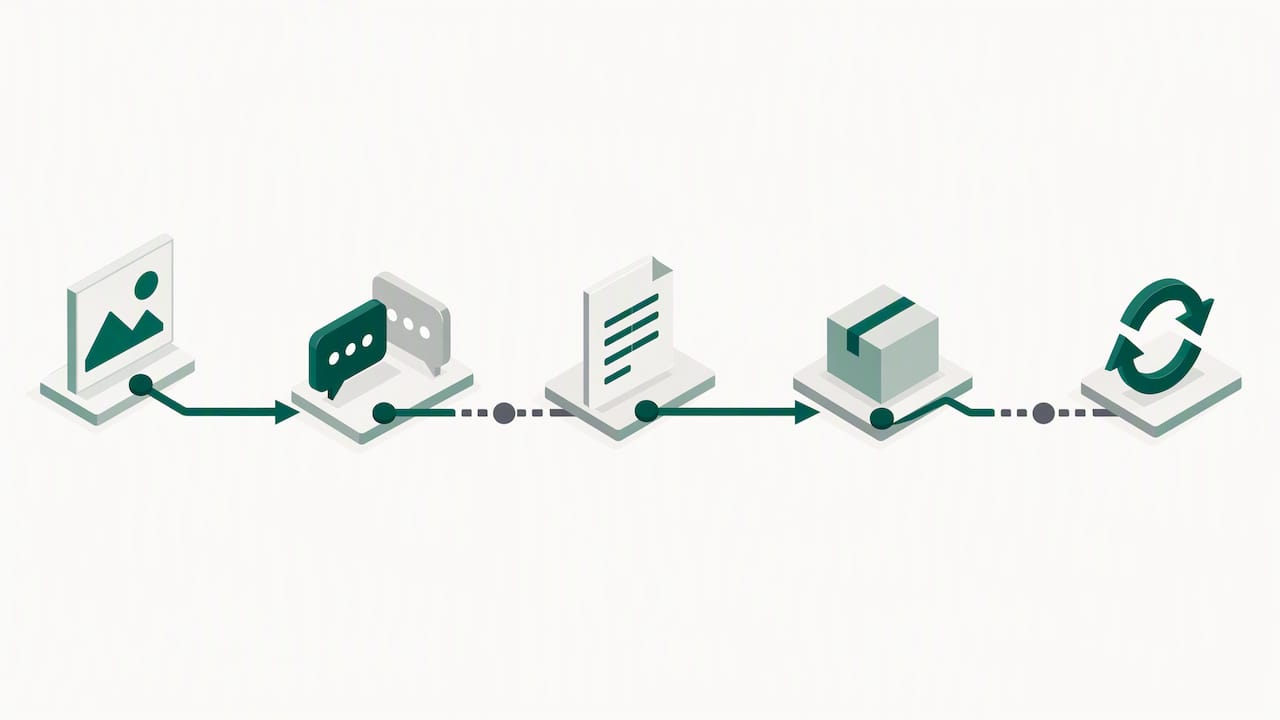
When messaging stays consistent from first touch through close, the buyer’s experience feels coherent, and that coherence does not stop mattering once the contract is signed. Customers who were sold an accurate picture of the product tend to onboard with fewer surprises and renew with fewer objections, because what they bought matches what they were promised.
The Forrester handbook frames this as a people, process, and technology problem that extends past the sale: customer-centric alignment is meant to drive growth, and growth in a B2B context is heavily weighted toward renewals and expansion, not just new logos. Misalignment between what marketing promised and what the product delivers shows up later as churn, even when the original sale looked clean.
Why leadership has to stay involved
Alignment rarely survives without a sponsor who owns it past the kickoff meeting. A joint SLA signed in a workshop and never reviewed again drifts back into old habits within a quarter, usually because no one above both team leads is checking whether it is still being followed.
Executive involvement matters most at two moments: setting the initial shared KPIs, where leadership has to resolve the inevitable tension between marketing’s lead volume goals and sales’ revenue targets, and reviewing performance quarterly, where leadership has to ask hard questions when the numbers diverge instead of letting each team present its own version of the story.
Communication from the top also sets the cultural tone. When a CEO or CRO talks about “the revenue team” instead of “marketing and sales” in all-hands meetings, that framing filters down. Tradeoffs between competing priorities, like the kind that stall rebranding efforts when executives will not commit to a single direction, apply just as directly to alignment: without someone willing to make the call when teams disagree, the SLA becomes a suggestion rather than an agreement.
Why brand clarity accelerates alignment
Most alignment breakdowns trace back further than the SLA. If positioning is inconsistent, sales ends up defending a story marketing never fully built, and reps start improvising to fill the gap. Clear, specific positioning removes that burden: when the market understands exactly what a company does and for whom, reps spend less time overcoming confusion and more time closing.
That is why we treat positioning as a decision, not a tagline exercise. A workshop that forces product, marketing, and sales to agree on the same few sentences about who the buyer is and why the company wins belongs early in any alignment roadmap, before SLAs and dashboards, because it gives those later artifacts something coherent to enforce.
Brand is not a marketing layer bolted onto the business. It is the operating logic that tells sales what to say and marketing what to build.
— Quincy
How we can help you align marketing and sales
We work with founders and executive teams who have the SLA and the dashboard but still feel the gap between what marketing promises and what sales can credibly sell. That gap is almost always a positioning problem wearing an operations disguise.
Our engagements typically include:
- A positioning audit that surfaces where marketing’s story and sales’ pitch have quietly diverged.
- A joint go-to-market workshop with product, marketing, and sales leadership in the room together.
- A structured framework, including The Golden Spiral™ and Brand-Backed Performance™, that ties brand decisions to measurable pipeline outcomes.
- A roadmap your teams can execute without us in the room for every step.
If your teams are stuck arguing about messaging instead of closing deals, explore our services or book a speaking engagement to bring this thinking to your next leadership offsite.
FAQ
How do you align sales and marketing?
Start by setting shared revenue KPIs both teams track on one dashboard, then document an SLA that defines MQL and SQL criteria and handoff timing. From there, run a joint ICP and messaging workshop and build a feedback loop so sales input shapes future marketing content.
What is the 3-3-3 rule in sales?
Definitions of the 3-3-3 rule vary by source and context, and no single authoritative version applies universally across sales organizations. Rather than rely on an unverified framework, focus on the SLA and shared KPI practices outlined above, which have clearer backing for improving alignment.
What does “sales and marketing alignment” mean?
It means marketing and sales share the same revenue goals, agree on buyer and lead definitions, and coordinate execution through a documented handoff process. The goal is coordinated effort toward one pipeline, not two teams working from separate playbooks.
What is the 3-3-3 rule for marketing?
As with the sales version, the “3-3-3 rule” is not a standardized or widely sourced framework in marketing, and definitions differ depending on where you encounter it. For a measurable approach to marketing’s contribution to revenue, track marketing-influenced pipeline and MQL-to-SQL conversion instead.
Sources
- Gartner survey reveals marketing and sales functions collaborate on only three out of 15 commercial activities
- 2025 B2B Sales & Marketing Benchmark Report
- Fuel Growth With Customer-Centric B2B Marketing Alignment
- Sales and Marketing Alignment: A Complete Guide | Salesforce