
Brand Loyalty Strategy for Leaders: Why Recognition Beats Points
A brand loyalty strategy is a deliberate plan to earn repeat purchases and genuine advocacy by making customers feel recognized and consistently well served, not just rewarded for spending. The central claim worth acting on: consistent customer experience plus recognition across the entire customer lifecycle drives more durable loyalty than points-based programs alone, and it pays off in higher customer lifetime value, stronger retention, and more organic referrals.
TL;DR:
- Measure attitudinal loyalty alongside repeat purchases; cohort analysis can reveal whether customers return from trust and attachment or merely habit.
- Set objectives before choosing rewards, then recognize reviews, referrals, community participation, and product feedback rather than rewarding spend alone.
- Use separate lifecycle messages for onboarding, retention, win back, and advocacy, and send advocacy prompts only after customers have shown genuine satisfaction.
- Pilot over 90 days: audit in weeks 1 to 4, test with a defined segment in weeks 5 to 8, then scale proven tactics.
- Before expanding a pilot, confirm compliant data practices, assigned ownership, approved budget, and agreed KPIs; otherwise, keep the test contained.
Table of Contents
- What Brand Loyalty Means and Why It Drives Revenue
- The Core Pillars of Brand Loyalty
- How Customer Experience Drives Loyalty
- A Practical Playbook: Prioritized Tactics to Build Loyalty
- How to Measure and Track Loyalty
- A 90-Day Plan to Launch and Scale Loyalty Work
- A Practitioner Framework for Turning Positioning Into Loyalty
- Why Recognition Outlasts Points
- How We Help You Build a Brand-Backed Loyalty Strategy
- FAQ
- Sources
What Brand Loyalty Means and Why It Drives Revenue
Brand loyalty splits into two distinct types, and confusing them leads to wasted budget. Attitudinal loyalty is the emotional commitment a customer feels: trust, attachment, a sense that a brand fits their identity. Behavioral loyalty is simply repeat purchasing, which can happen out of habit or convenience with no emotional investment at all. A customer who buys the same coffee brand because it is the only one at the corner store is behaviorally loyal but may switch the moment a better option appears nearby.
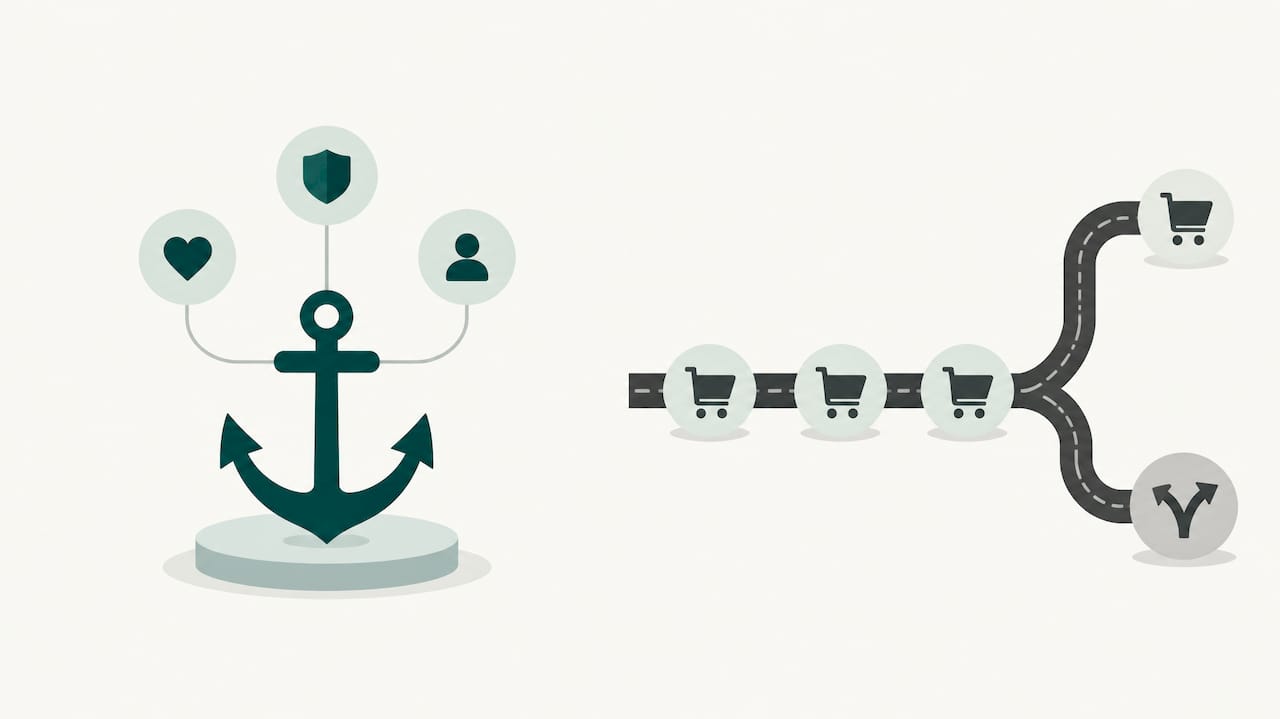
This distinction matters because only one type predicts resilience. A meta-analysis of 290 studies in the Journal of Consumer Research found that consumer-brand relationship constructs such as love, attachment, and trust carry a meaningful aggregate elasticity on loyalty, and that attachment and brand love tend to produce the strongest effects. Habitual repeat buyers can be won over by a competitor’s discount; attitudinally loyal customers stick around and talk about the brand to others.
The business case follows directly from that gap:
- Attitudinally loyal customers tend to tolerate price increases and competitor promotions better than habitual buyers.
- Retaining an existing relationship typically costs less than acquiring a new one through paid channels.
- Advocacy from emotionally attached customers generates referrals that behavioral loyalty rarely produces.
Recent HBR research on brand associations shows that measuring customer surplus value, the dollar value a customer feels a brand delivers, helps predict which customers are likely to stay and where to focus investment to raise perceived value.
The Core Pillars of Brand Loyalty
Every durable loyalty relationship rests on the same four foundations, delivered consistently rather than occasionally.
- Perceived value and quality: customers stay when the product or service reliably delivers what they expected, at a price that feels fair relative to that delivery.
- Trust and transparency: clear pricing, honest communication, and consistent follow-through build the confidence that underlies repeat behavior.
- Emotional connection: attachment, brand love, and a sense of shared identity turn a transaction into a relationship, which is where attitudinal loyalty actually lives.
- Recognition and reciprocity: acknowledging a customer’s history, preferences, and contributions, not just their spending, signals that the relationship runs both ways.
That fourth pillar is the one most loyalty programs skip. A points ledger rewards spend; recognition rewards the relationship itself, and that is the piece that keeps attitudinal loyalty from decaying.
How Customer Experience Drives Loyalty
Customer experience is where loyalty is actually won or lost, day to day, long before anyone checks a loyalty dashboard. Four levers matter most.
- A structured first-30-days onboarding playbook sets expectations early and prevents the silent churn that happens when new customers never fully understand what they bought.
- A deliberate service recovery process, designed in advance rather than improvised, turns a complaint into a trust-building moment instead of a reason to leave.
- CRM and first-party data make personalization meaningful rather than cosmetic, so outreach reflects actual purchase history and preferences instead of generic segments.
- Omnichannel consistency, including frictionless returns and fulfillment, removes the small frustrations that quietly erode attitudinal loyalty over time.
HBR’s research on a brand’s most devoted fans found that trust has been declining even as companies increase investment in loyalty infrastructure, which suggests the gap is in execution and consistency, not in budget. Readers managing B2B relationships specifically can find more on treating customer experience as a revenue discipline in orchestrating these levers across departments.
Pro Tip: Map your service recovery process before you need it. The first time a customer complains should not be the first time your team improvises a response.
A Practical Playbook: Prioritized Tactics to Build Loyalty
Building loyalty is not one program, it is a sequence of decisions, and the order matters.
- Set objectives and segment first. Decide what loyalty means for your business specifically: is it repeat purchase frequency, average order value, referral rate, or retention over a defined period? Then identify which customer segments are worth prioritizing, because not every customer has the same lifetime value or growth potential.
- Design mechanics that reward more than spend. A tiered structure can still anchor a program, but layer in recognition for reviews, referrals, community participation, and product feedback. Oracle’s guidance on customer loyalty recommends that programs stay simple to join, work across every channel, and recognize engagement beyond the purchase itself, treating the program as a first-party data asset rather than only an incentive ledger.
- Build lifecycle messaging that follows the customer, not the calendar. Onboarding should establish value quickly, retention messaging should reinforce it, win-back campaigns should re-engage lapsed customers with a reason tied to their history, and advocacy prompts should arrive only after genuine satisfaction is established. One sequence, four distinct moments, each with a different job.
- Treat front-line employees as a loyalty multiplier. Customers rarely separate the brand promise from the person delivering it at the counter or on the support line. Empowering front-line staff to resolve issues without escalation protects the trust pillar in real time, and it requires internal alignment between product, marketing, and sales so the promise made externally matches what gets delivered internally.
- Add experiential and partner tactics once the fundamentals hold. Exclusive access, community spaces, and user-generated content campaigns extend loyalty from transaction into identity, but they work only after value, trust, and recognition are already consistent.
Recognition-based mechanics specifically deserve more attention than most strategies give them; we go deeper on why loyalty programs alone cannot replace customer recognition in a dedicated look at the difference. For the community and content side of step five, tools like Postferry can help manage the content and social scheduling that user-generated campaigns depend on, and feedback-loop platforms such as Petĩra make it easier to show customers their ideas were heard, which reinforces the recognition pillar directly.
Pro Tip: Launch the recognition layer before the rewards layer. A customer who feels seen is more forgiving of a program’s early rough edges than one who only feels tracked.
How to Measure and Track Loyalty
Loyalty only stays a strategic priority when it shows up in numbers leadership actually reviews. Track these together rather than in isolation:
- Retention rate and repeat purchase rate show behavioral loyalty in motion.
- Customer lifetime value (CLV) ties loyalty directly to revenue impact.
- Churn rate flags where the relationship is breaking down before it shows up in revenue.
- NPS or CSAT captures attitudinal loyalty, the trust and satisfaction that predict future behavior.
Running attitudinal and behavioral metrics side by side through cohort analysis reveals whether a customer is loyal out of habit or out of genuine attachment, which changes what you should invest in next. Start experimentation with the highest-leverage variables first: test onboarding flow variants, compare reward types against recognition-based mechanics, and A/B personalization triggers before expanding anything program-wide. The HBR research on customer surplus value offers a useful lens here, since prioritizing investment around the dollar value customers feel they are getting tends to sharpen where loyalty spending actually pays off. For deeper measurement and experimentation support, a platform like Scanza can help track the performance signals that feed these decisions.
A 90-Day Plan to Launch and Scale Loyalty Work
Loyalty work fails most often when it launches as one big program instead of a phased test. A 90-day sequence keeps risk low while building proof.
- Weeks 1 to 4: audit and define. Map existing customer journeys end to end, set clear loyalty objectives tied to specific metrics, and identify one or two quick-win pilots you can launch without a full program build.
- Weeks 5 to 8: build and test. Stand up the CRM flows, reward mechanics, and recognition triggers for your pilots, then run them with a defined segment before any wider rollout.
- Weeks 9 to 12: scale and govern. Expand what worked, build the measurement dashboard from the metrics above, train front-line teams on their role, and assign clear ownership so the program does not stall once the initial excitement fades.
Before scaling past the pilot, confirm four things: data privacy practices are compliant, roles and ownership are assigned, budget is approved for the scaled version, and KPIs are agreed on in advance. For a more detailed phased framework with templates, see five brand strategy deliverables with a phased plan.
Pro Tip: Pick pilots you can kill quickly if they do not work. A 90-day plan only works if weeks 5 through 8 are genuinely allowed to fail.
A Practitioner Framework for Turning Positioning Into Loyalty
Connecting brand strategy to loyalty outcomes requires a method that ties positioning decisions to the experiences customers actually have. The Golden Spiral™ framework maps how clear positioning should translate into consistent customer experience, which is the mechanism that turns attitudinal loyalty into measurable revenue. Brand-Backed Performance™ extends that by linking brand decisions directly to performance metrics rather than treating brand as a separate marketing exercise.
A typical engagement built around these frameworks includes:
- A diagnostic that identifies where positioning, product delivery, and customer experience are misaligned.
- A roadmap that sequences fixes by impact, similar in structure to the 90-day plan above but scoped to the business.
- Defined KPIs, often drawn from the retention, CLV, and NPS metrics covered earlier, so progress is measurable rather than anecdotal.
More detail on the frameworks themselves is available on the brand strategy frameworks page.
Why Recognition Outlasts Points
Transactional loyalty programs decay for a predictable reason: a points balance is easy for a competitor to match or beat, but a customer who feels genuinely recognized has no equivalent reason to leave. The programs that hold up over years are the ones where recognition and brand clarity do the real work, with points as a secondary mechanic rather than the whole strategy.
None of this holds without cross-functional alignment. Product, marketing, and sales all shape the customer experience, and loyalty strategy collapses the moment one of those functions makes a promise the others cannot keep. Treat brand as a business discipline, not a marketing layer, and the loyalty follows.
— Quincy
How We Help You Build a Brand-Backed Loyalty Strategy
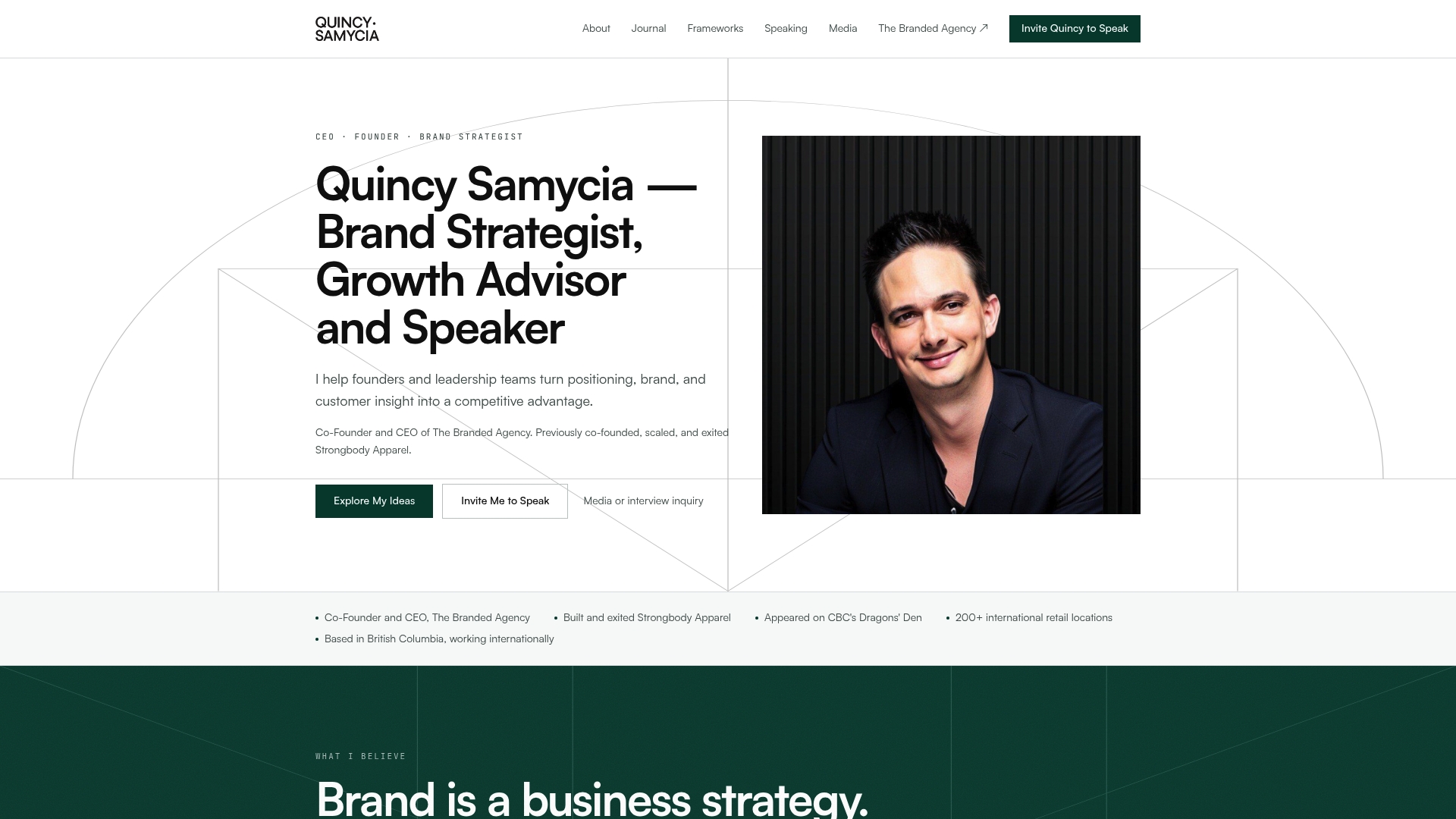
We work with founders, executive teams, and marketing leaders who want loyalty strategy that connects directly to revenue, not just a program for its own sake. We offer consulting in areas like brand strategy, brand positioning, growth and go-to-market strategy, and customer experience, typically starting with a diagnostic of where your positioning and customer experience are out of sync, followed by a roadmap sequenced by impact and tied to relevant business metrics. We also run executive workshops and keynote sessions for teams that want to align internally before scaling externally. If you want a structured path from positioning to measurable loyalty outcomes, start with our services overview or explore speaking engagements for your next leadership session.
FAQ
What are the five pillars of brand loyalty?
Most frameworks converge on value and quality, trust and transparency, emotional connection, recognition, and consistency of experience across every touchpoint. The strongest driver tends to be the emotional and attachment-based pillar, which a meta-analysis in the Journal of Consumer Research found carries the highest elasticity on loyalty outcomes among brand relationship constructs.
What is the 3-7-27 rule in branding?
Definitions of this rule vary across marketing sources and it is not tied to a named primary study, so we would caution against treating it as an established industry standard. If you encounter it, treat it as one informal heuristic among many rather than a rule to build a loyalty strategy around.
What are the most commonly used branding strategies?
Common approaches include positioning strategy, brand extension, co-branding, loyalty and retention programs, personal branding, and experiential or community-based branding. The strategies that hold up best over time combine clear positioning with consistent delivery, since a Coursera overview of brand loyalty notes that digital-era customers expect that consistency across every channel they use.
What are the three R’s of loyalty?
Loyalty frameworks commonly describe retention, referral, and relationship as the three outcomes a strong strategy should produce. Retention measures repeat behavior, referral measures advocacy, and relationship captures the attitudinal trust and attachment that make the first two durable, which is why Oracle’s guidance on customer loyalty frames programs as one part of a broader retention strategy rather than the whole of it.
Sources
- What is customer loyalty? | Oracle
- How Well Do Consumer-Brand Relationships Drive Customer Brand Loyalty? | Journal of Consumer Research
- New research on how brand associations drive customer spending | HBR